AGP Executive Report
Last update: 2 days agoIran–U.S. talks and Hormuz reopening dominate the news cycle (with Lebanon as the pressure point)
In the last 12 hours, coverage heavily focused on the U.S. waiting for Iran’s response to a new proposal aimed at ending the war and reopening the Strait of Hormuz. Multiple reports describe a shift toward a limited, temporary arrangement rather than a comprehensive settlement, with Iran expected to communicate its position via Pakistan as mediator. Reuters/AFP-style reporting in the provided material repeatedly links any progress on Hormuz to market moves—oil sliding on deal optimism—while also stressing that key disputes (especially Iran’s nuclear program) remain unresolved.
At the same time, the most recent reporting underscores how fragile the ceasefire environment remains. The U.S. fired on an Iranian oil tanker in the Gulf of Oman while Trump pressed for a deal, and Israel struck Beirut’s southern suburbs for the first time since the Lebanon ceasefire began—both presented as tests of whether diplomacy can hold. Several items also frame the talks as politically contested: opinion and commentary pieces argue Israel may not want a U.S.-Iran deal that preserves Tehran’s longer-term capabilities, and that Israel could seek to derail negotiations through escalation.
Lebanon’s ceasefire strain shows up in multiple angles, not just battlefield updates
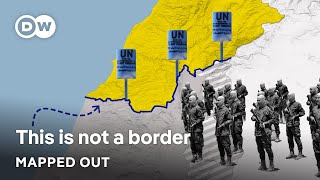
While the Iran–U.S. negotiations are the headline driver, Lebanon appears repeatedly as the downstream risk. The provided coverage ties potential Hormuz progress to possible easing in Lebanon, but also notes renewed strain after an Israeli strike killed a Hezbollah commander in southern Beirut. Another item explicitly describes “Crisis in Lebanon worsens despite ceasefire,” and multiple headlines reference Israel striking Lebanon/Beirut even as ceasefire language persists—suggesting that “ceasefire” conditions are contested on the ground.
Regional diplomacy and energy infrastructure: Jordan’s LNG continuity deal and Egypt–Lebanon gas work
Beyond the war-diplomacy thread, the last 12 hours include concrete energy-sector developments relevant to Lebanon’s broader regional context. Jordan’s NEPCO signed an agreement to lease a floating LNG unit (FSRU) to ensure continuity of gas supply ahead of the expiration of its current unit—framed as an energy-security and infrastructure-readiness measure. In the broader 7-day set, there is also reporting that Egypt and Lebanon signed/advanced agreements to rehabilitate or upgrade Lebanon’s gas pipeline and infrastructure, reinforcing continuity of regional energy cooperation even amid conflict.
Business/industry and other non-conflict items appear, but are secondary to the Iran–Hormuz–Lebanon storyline
The most recent material also includes non-war coverage—such as an explainer on IoT security risks and a report on Eli Lilly opening a genetic medicine facility in Lebanon’s LEAP district with a major investment—indicating ongoing industrial and technology activity in parallel with geopolitical risk. However, in this rolling window, these items read more like “background continuity” than the dominant narrative, which remains centered on whether a temporary U.S.–Iran framework can stabilize Hormuz and reduce spillover into Lebanon.
Note: AI-generated summary based on news headlines, with neutral sources weighted more heavily to reduce bias.